A Closer Look at Wealth, Politics, and Ethical Entrepreneurship
Jonathan Werner's journey from a modest loan to purported billions is a captivating tale. However, his story isn't simply one of financial success; it's a complex narrative interwoven with significant political donations, raising questions about the interplay between wealth, politics, and ethical business practices. This article explores Werner's entrepreneurial ascent, contrasting it with the often-opaque world of billionaire political giving. While the precise figure of his net worth remains undisclosed, the story offers compelling insights. Learn more about reaching high-net-worth individuals by visiting this helpful resource: Marketing to HNWIs.
The Billions Behind the Ballots: Analyzing Political Donations
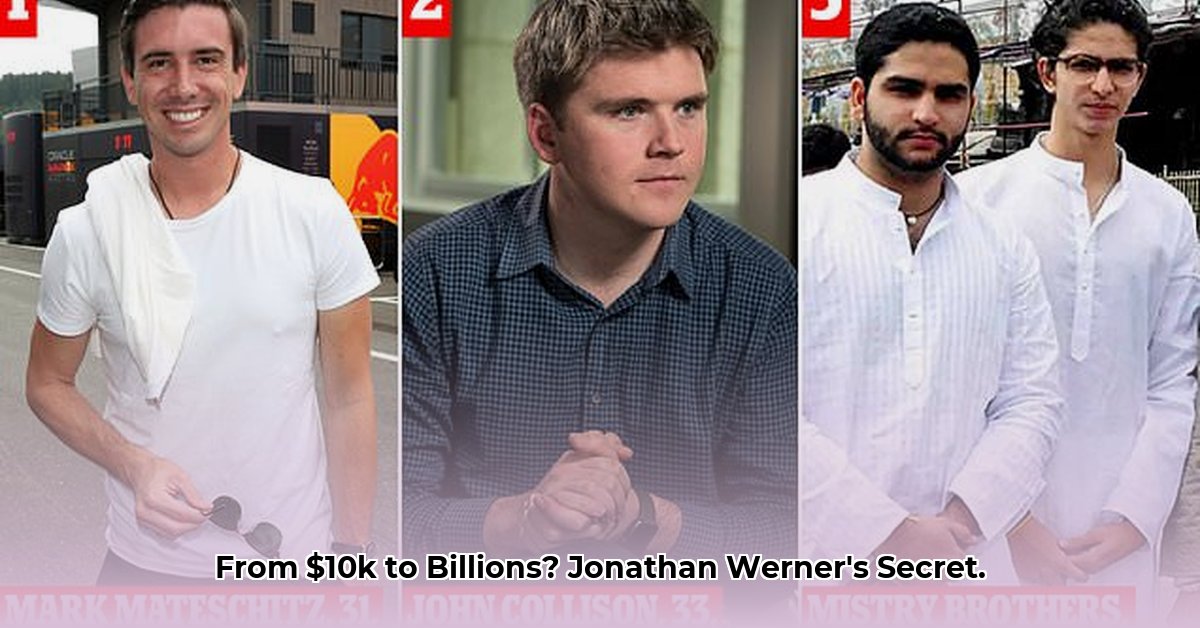
The 2020 US presidential election witnessed a surge in donations from America's ultra-wealthy. Reports indicate a significant preference for Joe Biden's campaign among this group, far exceeding support for Donald Trump. While the average donation might have been around $170,000, the motivations behind these contributions are complex and debated. Are they purely altruistic expressions of political ideals? Or are they calculated investments intended to secure future influence?
The geographical distribution of these donations adds another layer of complexity. A concentration of contributions from coastal states, especially those with significant tech and finance sectors, suggests potential sectoral biases in political giving. The wide range of donation amounts—from substantial six-figure sums to smaller contributions under $5,000—hints at a spectrum of motivations, not solely transactional ones. This creates a multifaceted picture, far more nuanced than a simple "money buys influence" narrative. Does this suggest that political donations are always about securing access, or is genuine political conviction a significant factor at play?
Jonathan Werner's Ascent: A Story of Grit and Ethical Choices
In contrast to the often-murky world of billionaire political donations stands Jonathan Werner's story. Interviews paint a picture of perseverance, innovation, and a commitment to ethical business practices. His early success, amassing a million dollars within six months during university, showcases remarkable business acumen. However, his narrative isn't solely about wealth accumulation; it's about the values that guided his journey. His well-publicized rejection of a $10 million deal due to ethical concerns demonstrates a commitment to principle rarely seen in high-stakes business. This suggests a long-term, sustainable approach to wealth creation, rooted in integrity.
His focus on long-term relationships and ethical conduct suggests a fundamentally different approach to wealth generation—one that prioritizes long-term value and reputation over short-term gains linked to political maneuvering. Does this suggest a more sustainable and ethical route to success than the often opaque connections between money and political influence?
Comparing Contrasting Paths: Integrity Versus Strategic Investment
Determining Jonathan Werner's exact net worth remains a challenge due to the absence of public information. Yet, the narrative surrounding his career strongly indicates significant wealth. This starkly contrasts with the often-less-transparent nature of political donations from other billionaires. We're presented with two distinct models: one built on strategic political alliances, the other on ethical entrepreneurial practices.
This comparison, however, acknowledges limitations. The lack of precise figures for Werner's net worth and the ongoing debate around the motivations behind political donations limit definitive conclusions. Nevertheless, juxtaposing these narratives provides a critical lens through which to examine the complex interplay of wealth, power, and ethics in the 21st century. Does the ethical approach taken by Werner truly offer a more enduring model for success than the short-term gains potentially derived from political influence?
Lessons Learned: Implications for All Stakeholders
The contrasting narratives of billionaire political donations and Jonathan Werner's entrepreneurial journey offer valuable insights for various stakeholders:
- Political Strategists: Campaign strategies must account for diverse donor motivations and geographic patterns.
- Aspiring Entrepreneurs: Ethical conduct builds lasting value and attracts skilled talent.
- Business Educators: Curriculum should embrace diverse entrepreneurial models emphasizing ethical practices.
- Investors: Ethical considerations should be integrated into financial decision-making.
- The Public: Critical assessment of wealth accumulation and its societal impact is necessary.
In conclusion, the exploration of Jonathan Werner's financial success, set against the backdrop of large-scale political donations, offers a valuable case study in the multifaceted relationship between wealth, politics, and ethics. It compels us to question the various paths to success, the values that underpin them, and the broader implications for society. The ongoing debate underscores the need for continued critical analysis and transparency in the realm of wealth creation and political influence.